MASS Phenotype is a connective tissue condition that is similar to Marfan syndrome. It is caused by a similar mutation in the gene called fibrillin-1. Someone with MASS phenotype has a 50 percent chance of passing the gene along to each child.
MASS stands for the Mitral valve, myopia, Aorta, Skin and Skeletal features of the condition.

What are the Key Features of MASS Phenotype?
In MASS Phenotype:
- Mitral valve prolapse may be present. This is when the flaps of one of the heart’s valves (the mitral valve, which regulates blood flow on the left side of the heart) are “floppy” and don’t close tightly.
- Aortic root diameter may be at the upper limits of normal for body size, but unlike Marfan syndrome, there is no progression to aneurysm or predisposition to dissection.
- Skin may show stretch marks unrelated to weight gain or loss (striae).
- Skeletal features, including curvature of the spine (scoliosis), chest wall deformities, and joint hypermobility, may be present.
People with MASS Phenotype do not have lens dislocation, but may have myopia, also known as nearsightedness.
When a person has these particular features, it is important to be evaluated for MASS Phenotype.
You may contact our Help & Resource Center with questions anytime at marfan.org/ask.

What causes MASS Phenotype?
MASS Phenotype can be caused by a change in the FBN1 (fibrillin-1) gene, the same gene that causes Marfan syndrome. It can be inherited within families (passed down through generations). It is autosomal dominant, which means that someone with MASS Phenotype has a 50/50 chance of passing the gene to each child. There may be other genes that can cause MASS Phenotype.
How is MASS Phenotype diagnosed?
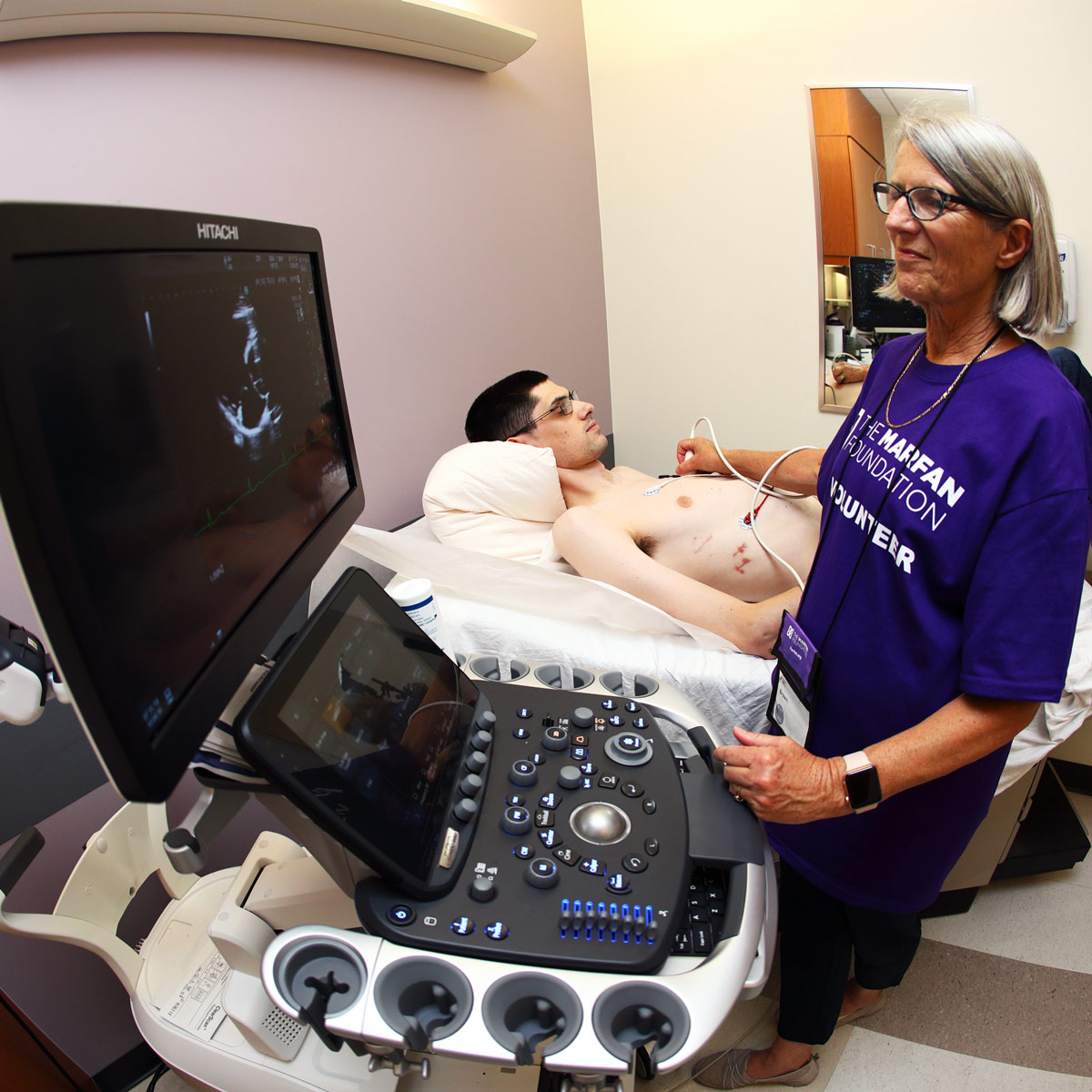
MASS Phenotype can only be diagnosed after a comprehensive evaluation by an ophthalmologist, cardiologist, and geneticist (or other doctor) who look for features of a connective tissue condition throughout the body. Both a slit lamp eye exam and an echocardiogram should be done to exclude
eye lens dislocation and aortic enlargement, respectively. Echocardiograms should be performed intermittently to exclude emerging Marfan syndrome. Family history is also important. If one individual in the family shows development of an aortic root aneurysm, the diagnosis would change to Marfan syndrome for all affected people in the family.
Is there a genetic test for this gene?
Currently, there isn’t a gene test that can differentiate MASS Phenotype from Marfan syndrome.
How is MASS Phenotype Managed?
Like Marfan syndrome, MASS Phenotype affects different people in different ways. It is important that the treatment focus on the specific features that are present, regardless of the actual diagnosis.
Always talk to your doctor about your specific needs.

Have a question?
We can help.
Contact our Help & Resource Center by submitting a question via the link below.